Services
EnquBio's Comprehensive Drug Discovery Solutions & Services
At EnquBio, our expert team delivers high quality, efficient, and dependable R&D solutions that enable pharmaceutical and biotech partners to advance and expand their drug development pipelines.
- Discovery Biology
- Plate-Based Pharmacology
- Ex Vivo Pharmacology
-
In Vivo Pharmacology
- Inflammation & Autoimmune Diseases Models
- Syngeneic and Cell Line-Derived Xenograft (CDX) Models
- Humanized Immuno-Oncology Models
- FLI and BLI based optical in vivo imaging for orthotopic models and drug biodistribution
- Pharmacokinetic and Pharmacodynamic (PK/PD)
- Non-GLP Toxicology
- Other In Vivo Efficacy Models
- Biomarker & Bioanalysis
- Therapeutic Areas
Inflammation & Autoimmunity
EnquBio supports inflammation and autoimmune drug programs with functional immunology assays, ex vivo pharmacology in human and preclinical samples, established in vivo disease models, and quantitative biomarker readouts—designed and run by one team, so mechanism, efficacy, and biomarkers stay connected across the program.

Functional Immunology Assays
Precise evaluation of compound effects on immune-cell function in controlled, human-relevant systems—with access to banked and fresh human PBMCs, T cells, B cells, NK cells, and myeloid populations.
T-Cell Biology
- T-cell activation
- T helper cell differentiation
- Proliferation and cytokine secretion
- Activation-marker expression
B-Cell Biology
- B-cell stimulation
- Activation and differentiation
- Functional readouts
Innate Immunity
- Macrophage polarization
- Dendritic-cell polarization
- Myeloid-cell function
Customized Readouts
- Cytokine secretion
- Surface-marker profiling
- Cytotoxicity
- Assays tailored to each program
Disease-Relevant Pharmacology
Move from clean-system mechanism to disease-relevant response using primary samples and established models.
Whole Blood & PBMC Pharmacology
Stimulation and challenge assays with phospho-signaling (pSTAT), cytokine release, and immune profiling—across human donors and preclinical species including cynomolgus monkey, dog, rat, and mouse.
Inflammation & Autoimmune Models
Established in vivo disease models with integrated PK/PD, biomarker, and downstream ex vivo functional analysis from the same studies.
Cytokine & Signaling Readouts
Multiplex MSD cytokine and chemokine analysis, Jess protein and phosphoprotein analysis, flow cytometry immunophenotyping, and gene-expression readouts.
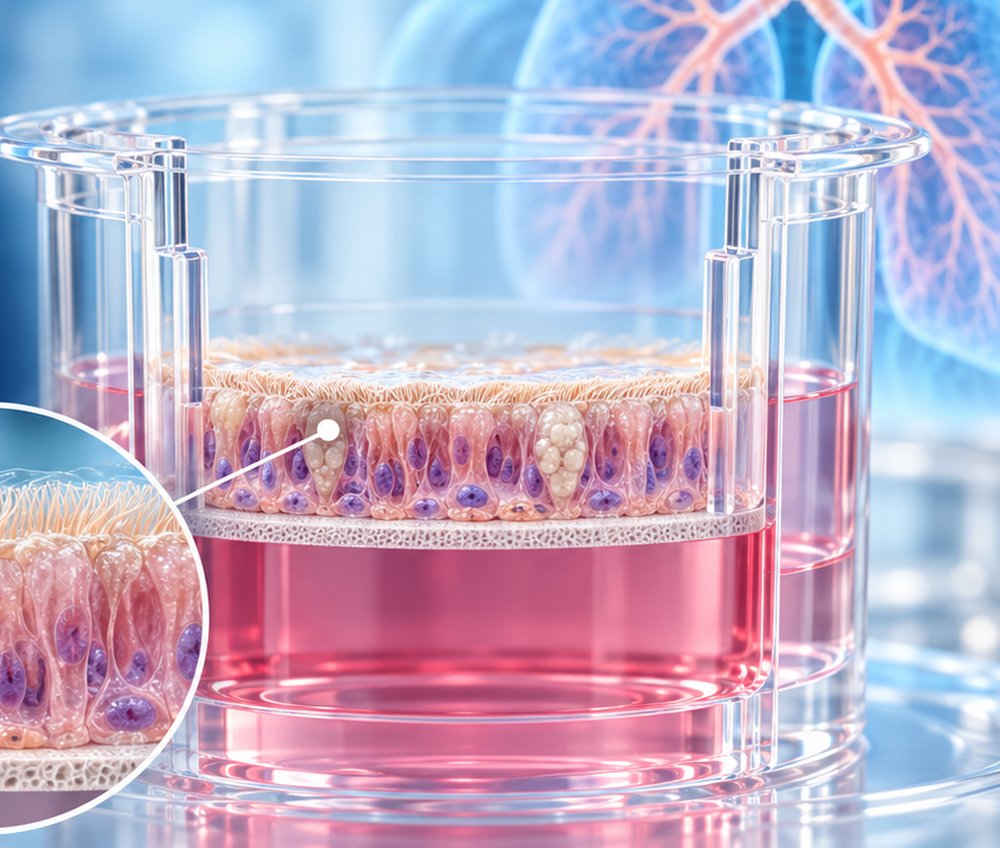
Human Airway ALI Model
A differentiated NHBE air–liquid interface epithelium with a validated Type 2 (IL-4 / IL-13) response for asthma, COPD, and respiratory programs.
Primary human bronchial epithelial cells differentiate at the air–liquid interface into a pseudostratified mucociliary epithelium with MUC5AC+ goblet cells and ciliated cells, stable for up to 2 months. IL-4 / IL-13 stimulation reproduces the goblet-cell, mucin, and chemokine signature of Type 2 asthma, giving a disease-relevant human system for compound evaluation.
One Program, Connected Readouts

Planning an inflammation or autoimmune program?
Share your target, pathway, and stage. Our scientists can propose the assay systems, models, and biomarker strategy that best connect mechanism with disease-relevant response.
Contact Our Scientists →