Services
EnquBio's Comprehensive Drug Discovery Solutions & Services
At EnquBio, our expert team delivers high quality, efficient, and dependable R&D solutions that enable pharmaceutical and biotech partners to advance and expand their drug development pipelines.
- Discovery Biology
- Plate-Based Pharmacology
- Immunology
- Ex Vivo Pharmacology
-
In Vivo Pharmacology
- Inflammation & Autoimmune Diseases Models
- Syngeneic and Cell Line-Derived Xenograft (CDX) Models
- Humanized Immuno-Oncology Models
- FLI and BLI based optical in vivo imaging for orthotopic models and drug biodistribution
- Pharmacokinetic and Pharmacodynamic (PK/PD)
- Non-GLP Toxicology
- Other In Vivo Efficacy Models
- Biomarker & Bioanalysis
Exploratory Clinical Sample Analysis
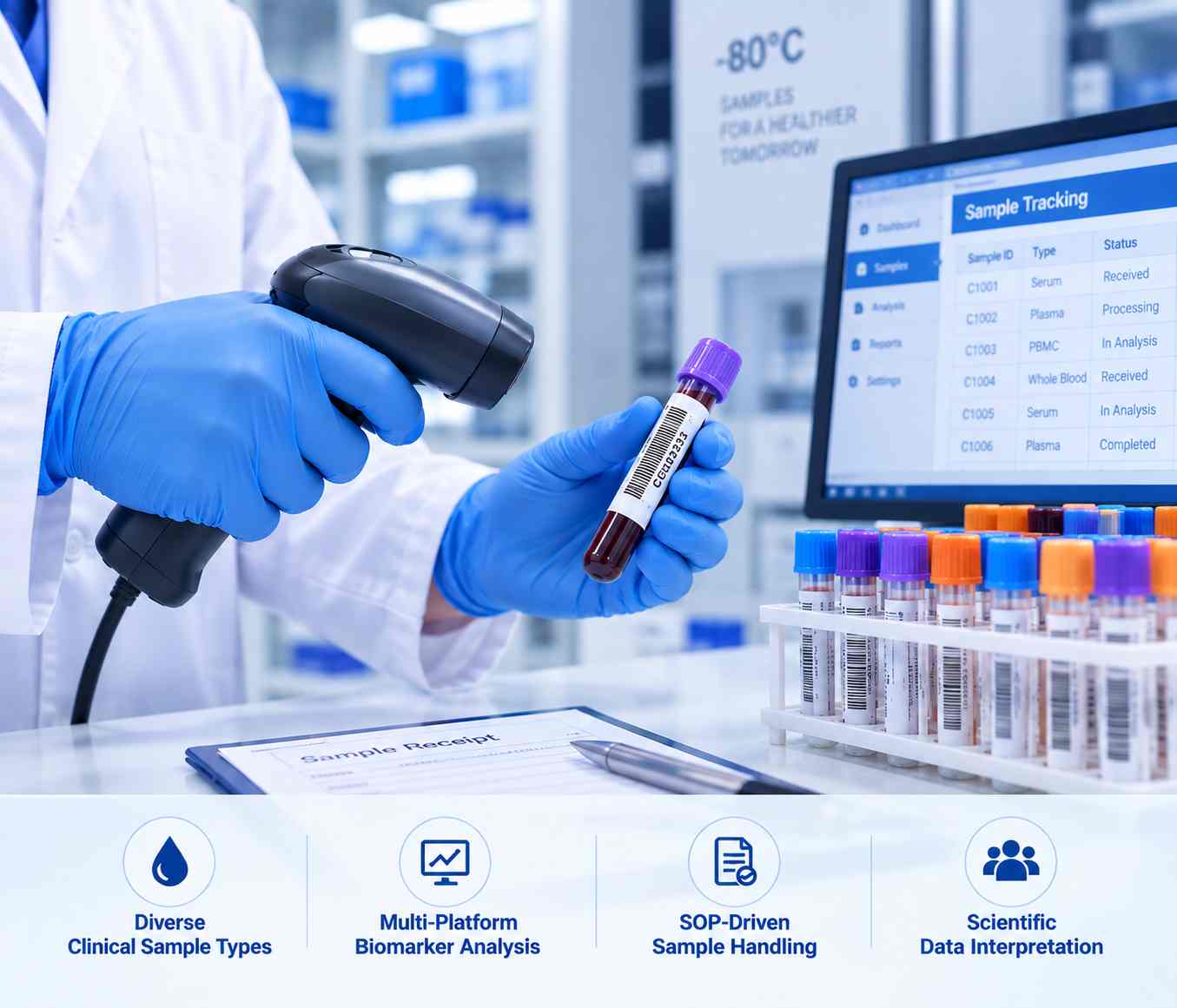
EnquBio analyzes exploratory clinical samples — serum, plasma, PBMCs and whole blood from clinical research cohorts — as well as preclinical study samples, across multiple analytical platforms. Studies run under established SOPs with documented sample receipt and chain of custody. EnquBio is not a GLP or CLIA laboratory: analyses are fit-for-purpose and exploratory, which keeps studies faster and more cost-efficient than regulated bioanalysis, supporting research and translational decision-making rather than regulatory submission or clinical diagnosis.
One Sample Set. Multiple Biological Readouts.
A single program can combine cellular, soluble-protein, protein-signaling and molecular biomarker endpoints.
Cell identity and functional state
- Immunophenotyping
- Activation / differentiation
- Target expression
- Receptor occupancy
- Intracellular signaling
Secreted and circulating proteins
- Cytokines
- Chemokines
- Growth factors
- Soluble receptors
- Pharmacodynamic biomarkers
Protein-level pathway responses
- Total protein expression
- Phosphoproteins
- Protein degradation
- Cleavage / processing
- Pathway modulation
Targeted nucleic-acid analysis
- Gene expression
- Absolute quantification
- Copy number
- Molecular PD markers
- Target knockdown confirmation
Start With the Sample, Not the Platform
The analytical strategy is selected after considering the biology, matrix, available volume, target abundance, throughput and required sensitivity.
Biological Question
What decision should the biomarker data support?
Sample Constraints
What matrix, volume, cell number, viability and storage history are available?
Biomarker Strategy
Which cellular, protein and molecular endpoints are most informative?
Analytical Approach
Which platform—or combination of platforms—best answers the question?
Preclinical to Translational Research
Biomarker strategies can follow the program from model systems into human research samples.
Study-derived animal and model samples
Support biomarker endpoints generated alongside in vivo and other preclinical studies.
- Whole blood, serum and plasma
- Tissues and tumor samples
- Splenocytes / immune cells
- Study-derived supernatants
Human ex vivo and disease-relevant samples
Bridge preclinical biology with human cellular and molecular responses.
- PBMCs and whole blood
- Primary human cells
- Disease-relevant donor samples
- Ex vivo stimulated samples
Client-provided human research samples
Analyze predefined biomarker endpoints in appropriately handled research specimens.
- Serum and plasma
- PBMCs
- Whole-blood-derived samples
- Other project-specific specimens
The Sample Journey
From initial sample review to integrated reporting.
Sample & Study Review
Matrix, volume, storage, sample number, design and target list.
Biomarker Strategy
Define the most informative cellular, protein and molecular endpoints.
Assay Selection
Match method to sensitivity, matrix, throughput and sample constraints.
Sample Analysis
Execute fit-for-purpose workflows with appropriate controls and QC.
Integrated Interpretation
Evaluate cross-platform changes in the context of biology, dose and time.
Data Package & Report
Deliver processed data, QC information and study-level conclusions.
Sample Types
Study design is adapted to the biological matrix and available sample material.
Blood-Derived
- Whole blood
- PBMCs
- Serum
- Plasma
Cell-Based
- Primary cells
- Immune-cell cultures
- Cell pellets
- Culture supernatants
Tissue-Derived
- Tumor tissue
- Normal tissue
- Tissue lysates
- Tissue homogenates
Study-Specific Samples
- Preclinical study samples
- Ex vivo treated samples
- Client-provided research specimens
- Other fit-for-purpose matrices
Integrated Multi-Platform Analysis
Different assay modalities can be combined within one study to build a more complete biological picture.
What Clients Receive
A practical data package designed to support program decisions.
Why EnquBio
Integrated biomarker support built around biological questions and valuable samples.
Frequently Asked Questions
Can a non-GLP laboratory analyze clinical samples?
Yes. Exploratory, research-use analysis of clinical research samples does not require GLP or CLIA certification.
EnquBio analyzes appropriately consented human research specimens under established SOPs for biomarker and
pharmacodynamic endpoints. Data support research and translational decisions; they are not used for regulatory
submission or patient diagnosis.
What is the difference between exploratory and regulated (GLP/CLIA) bioanalysis?
Regulated bioanalysis follows full method validation and compliance requirements needed for regulatory
submission or clinical reporting, which adds time and cost. Exploratory analysis uses fit-for-purpose
qualification matched to the research question — typically faster and more cost-efficient — and is the
appropriate level of rigor for biomarker discovery and exploratory endpoints.
Which platforms can be applied to clinical research samples?
Depending on the endpoint, samples can be analyzed by MSD and other immunoassays, ProteinSimple Jess,
RT-qPCR and ddPCR, and multicolor flow cytometry — individually or combined within one study.

Have samples, but not yet a biomarker strategy?
Send us your sample type, available volume, study design and biological question. Our scientists can recommend an integrated fit-for-purpose analysis plan.
Contact Our Scientists →